
What Is Power Quality Testing and Why Does It Matter for Australian Businesses
Most electrical problems don't produce much noise. They come in slowly, like little difficulties, delays that can't be explained, or machines that don't work like they used to. Power quality Testing in Melbourne helps detect these problems early, before they become difficult to run the business or damage valuable equipment.
Electricity is not limited to a utility cost in the manufacturing and industrial sectors. It is becoming essential to make things work better. When power quality declines, it becomes less reliable, more costly to fix, and requires swift response from those in charge. That is where long-term costs begin to rise.
Understanding Power Quality Without the Technical Fog
Power quality may sound complex, but the concept behind it is straightforward. It explains how electricity works when your systems are running.
When the voltage, current, and frequency don't change, the equipment operates correctly. Changes put significant stress on motors, drives, and control systems. Most of the time, this kind of stress doesn't break things straight away. It doesn't make things less useful and reliable immediately; it does so gradually.
A lot of the time, the facilities in Melbourne maintain running even when the power is bad, and they don't even know it. The signs are usually small at first. The machines get hotter, automation doesn't work as well, and mistakes happen more often. These small issues build up over time and become huge challenges for the business.
Companies that use energy-saving technologies and automated tasks can't handle power disruptions as efficiently as they used to.
How Power Quality Testing Works in Real Life

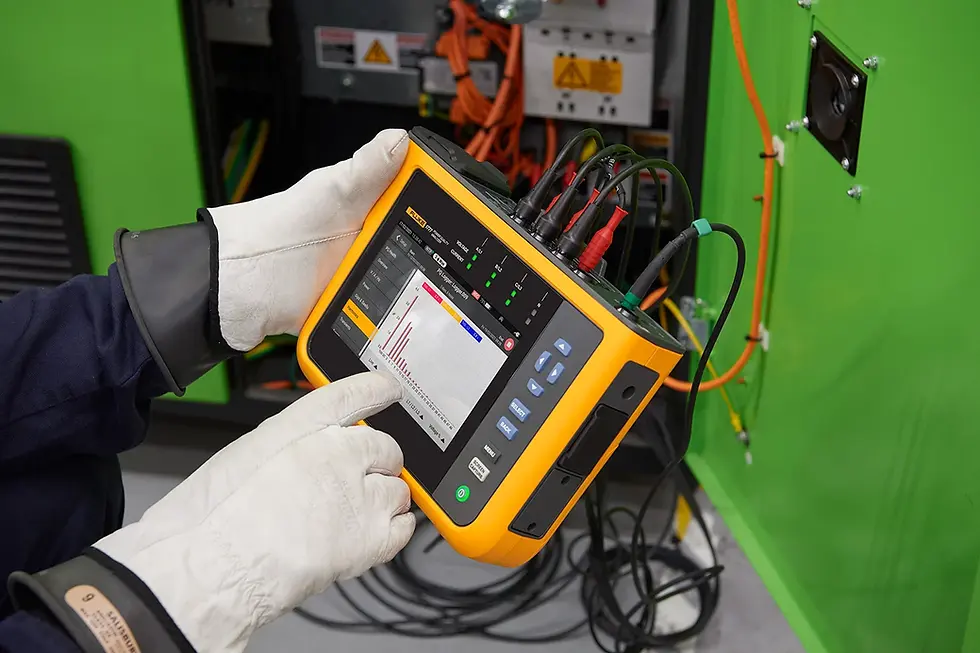
There is more to Power Quality Testing than just simple checks. It entails watching your electrical system while it's working properly.
Instead of a single reading at a time, data are collected over time. This method explains how power works during high demand, when shifts change, and when machines start up. In these kinds of settings, problems are usually buried.
Testing usually only looks at a few important areas because each one affects how things work differently:
Voltage stability, which impacts how effectively motors function and how long things last
Harmonic distortion, which is commonly created by new electronic gadgets
The load balance, which tells you how well things perform and how hot they get
Short-term changes, including spikes or decreases, can break automation.
These processes help companies to understand what's going on and why.
Why Problems with Power Quality Are Happening More and More
Many power-quality problems originate inside the facility rather than from the supply. This trend has gotten stronger as factories and other industrial sectors have become more complex.
Variable speed drives, automated systems, and high-efficiency machinery are key factors that can improve output but also introduce electrical noise and imbalance. These difficulties will keep happening until electrical fault detection works, and they won't go away.
That's why some businesses keep facing the same faults over and over, even after they fix them. Even if the symptom goes away, the underlying electrical system problem that caused it will remain.
Power Quality Testing examines the cause of the problem rather than what happened.
Reducing Downtime Through Predictive Insight
Unplanned downtime is often caused by more than one unforeseen event. Most of the time, electrical systems will let you know something is wrong long before they stop working.
Power Quality Testing helps you detect these early symptoms. You can arrange maintenance ahead of time instead of waiting for a breakdown. This makes planning more accurate and also improves production.
With emergency response services available 24 hours a day, businesses can also be assured that serious problems will be resolved quickly if circumstances change suddenly. In the end, there are fewer disruptions and a better balance of the operations.
Extending Equipment Life and Protecting Capital Investment
Industrial machines can only work efficiently with a certain amount of electricity. When certain limits are crossed, wear happens more quickly.
Motors, transformers, and control panels run hotter, vibrate more, and put greater strain on the electrical system when power quality is poor. Parts break down sooner than expected, insulation wears out, and bearings wear out.
Power Quality Testing shows where this stress is building up. You can identify hidden hot spots before they cause damage using thermal imaging and other technologies. By correcting these problems early, businesses delay major replacements and extract full value from existing assets.
Making Systems For Automation And Control More Dependable
Everything has to be the same for automation to work. Even brief power interruptions might cause sensors to read data incorrectly or control systems to reset without notice.
Checking the quality of the power supply ensures it is ideal enough for today's automated workplaces. Stable power assists with proper signal processing, reliable communication between devices, and smoother overall performance.
This stability directly enhances the safety and efficiency of facilities with continuous processes or complex production lines.
Industry Specific Value That Goes Beyond Generic Solutions
There are a lot of different electrical dangers in a lot of different areas. A plan that works for everyone nearly never works out.
You can adjust how Power Quality Testing is conducted to meet the business's requirements. For example, cold storage facilities need reliable power to keep the stored items safe and at the proper temperature. It's crucial to keep loads balanced to protect motors and conveyors throughout manufacturing. Processing plants need automation that works all the time to keep things safe and moving.
This concentrated plan makes sure that all assets are safe and that all regulations for compliance are followed.
Turning Test Results Into Practical Improvements

Power Quality Testing alone doesn't work. You learn by observation, analysis, and function to figure things out.
Industrial electrical experts can turn test results into clear recommendations. These include modifying the system, adding filters, or making specific enhancements based on how well it performs. It's more about assumptions, guesswork, and decisions based on real evidence.
This kind of openness allows corporate executives to safely set investment goals, stick to budgets, and plan for changes.
Power Quality Testing Compared to Reactive Electrical Repairs
A short comparison highlights why Power Quality Testing delivers stronger long-term outcomes.
Area | Reactive Electrical Repairs | Power Quality Testing |
Timing | Issues are addressed only after the equipment fails | Potential issues are identified before failures occur |
Cost Management | Expenses are unplanned and often unpredictable | Costs are planned, controlled, and easier to budget |
Downtime Impact | Production stops suddenly and disrupts operations | Downtime is reduced through scheduled interventions |
Asset Lifespan | Equipment wears out faster due to repeated stress | Assets last longer through early issue detection |
Decision Basis | Decisions rely on visible symptoms and breakdowns | Decisions are based on measured performance data |
Reactive repairs fix things that are already broken, but Power Quality Testing helps to prevent the issues from happening in the first place.
Why Melbourne Businesses Are Shifting to Proactive Electrical Management
Electricity prices keep going up, and it's getting harder to follow the laws all around Australia. At the same time, being competitive doesn't leave much room for outages that happen out of the blue.
Power Quality Testing is now an important part of good electrical management. It makes systems safer, more dependable, and easier to understand over time. Now, most businesses in Melbourne have to do it.
Conclusion:
Power Quality Testing helps Melbourne businesses move quickly. The Australian Energy Regulator notes that monitoring power quality plays an important role in maintaining safe and reliable electricity networks across Australia. For businesses, this translates into smoother day-to-day operations, reduced risk of unexpected outages, and clearer confidence in long-term electrical performance. Keep their equipment secure and reliable so operations run smoothly. It makes factories safer, more efficient, and better in the long run.
EES Electrics offers Australian businesses simple, reliable, and forward-looking industrial electrical services. Our team ensures your electrical systems are always working well by handling everything from thorough testing to speedy replies at all hours of the day and
night.
Frequently Asked Questions (FAQ)
How often do you need Power Quality Testing?
Every one to three years, most factories and other industrial sites should be checked. You should check on places with a lot of automation or a lot of work more often.
Does having bad power quality make running a business more expensive?
Yes. When power isn't working properly, machines work harder, which requires more energy and speeds up wear and tear over time.
Will checking the quality of the power make operations harder?
Testing generally doesn't get in the way and happens when systems are working correctly.
Does checking whether the electricity is working help you obey the rules?
It makes electrical work safer and shows you did your homework when you conduct inspections and audits.
Who should check the results of power quality testing?
Qualified industrial electrical specialists ensure results that lead to long-term improvements rather than short-term fixes.

Comments